Essay · May 10, 2026 · 5 min read
AI-native, not AI-enabled.
Most companies are bolting AI onto an existing structure. We are doing the opposite: starting from the AI side and building a company around it.

There is a lot of talk right now about AI-enabled companies. The pattern is usually the same. A company with fifty or a hundred people adds an AI tool to a workflow. The work gets a little faster. The headcount stays the same. The shape of the business does not change.
AI-native is the other direction. Start with the AI. Hire one human for the parts the AI can not do. Add a second human only when the work demands it. The shape of the company is decided by the shape of the work, not by what is normal for a company that size.
What the difference actually looks like
In an AI-enabled agency, six humans run a project and one of them uses a copy assistant. In an AI-native agency, one human runs a project and six specialist AI agents handle the research, the planning, the design, the build, and the QA. The output looks the same to the client. The cost structure is completely different.
6
Humans, old way
1
Human, AI-native
6
AI agents
Same
Output to the client
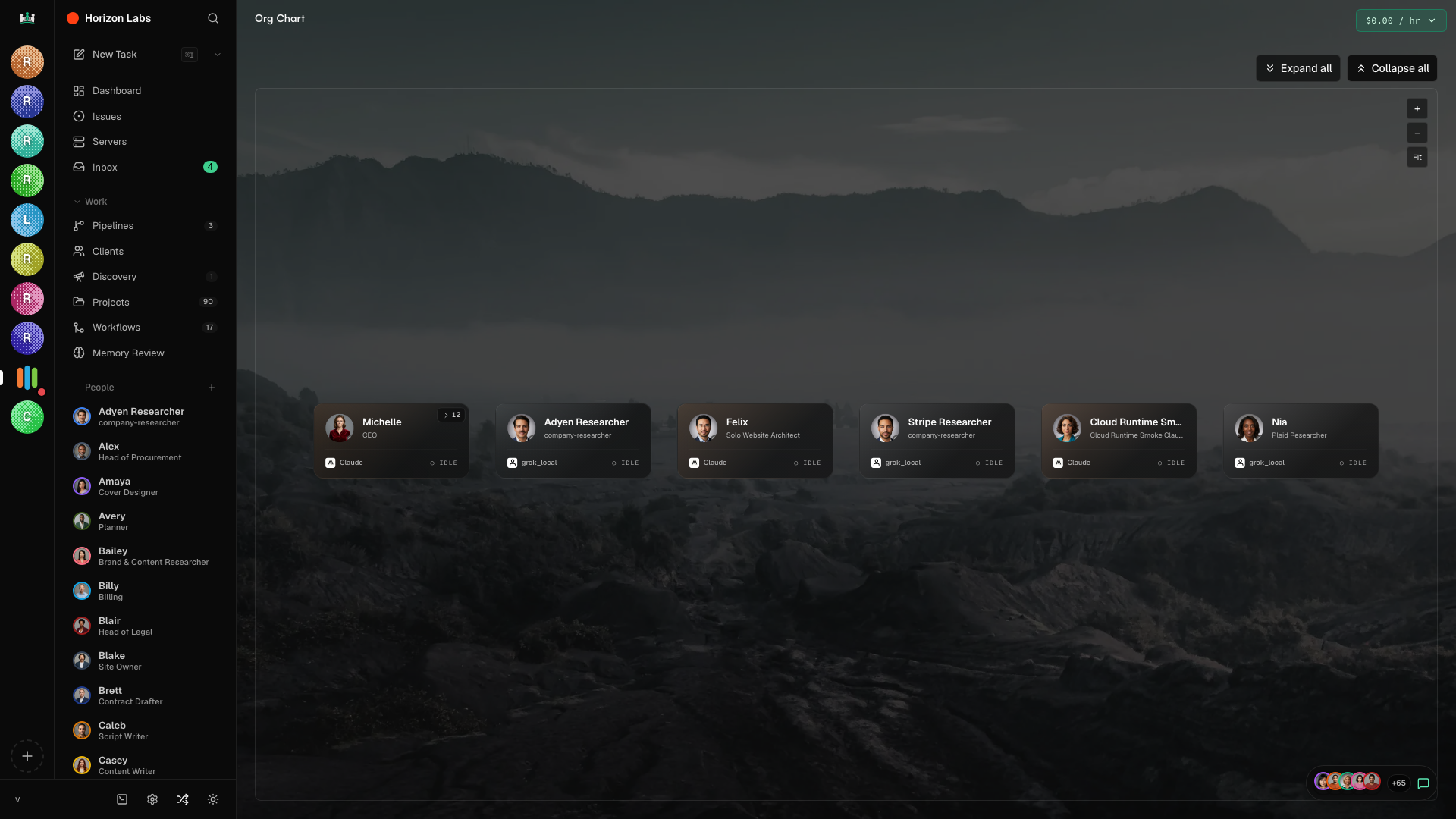
That is what we are doing at Horizon Labs. One founder, six AI agents, real client work shipping. It is the first proof of the idea. It will not be the last.
If a human and the right agents can do the job, do not hire a second human until the work demands it.
The rough rule we use
What the founders we want sound like
We notice when somebody talks about their business in AI-native terms instead of AI-enabled ones. They do not start by asking how many people they need to hire. They start by asking what the work actually is, and then who or what should do each piece. They take the question of whether a piece needs a human seriously.
That mindset is what we are looking for in the next wave of founders. AI does not change the value of human judgement. It changes how much else has to surround that judgement.